Smart Automation in Luxury Home Theaters: Control Systems, Lighting Scenes, and AV Integration
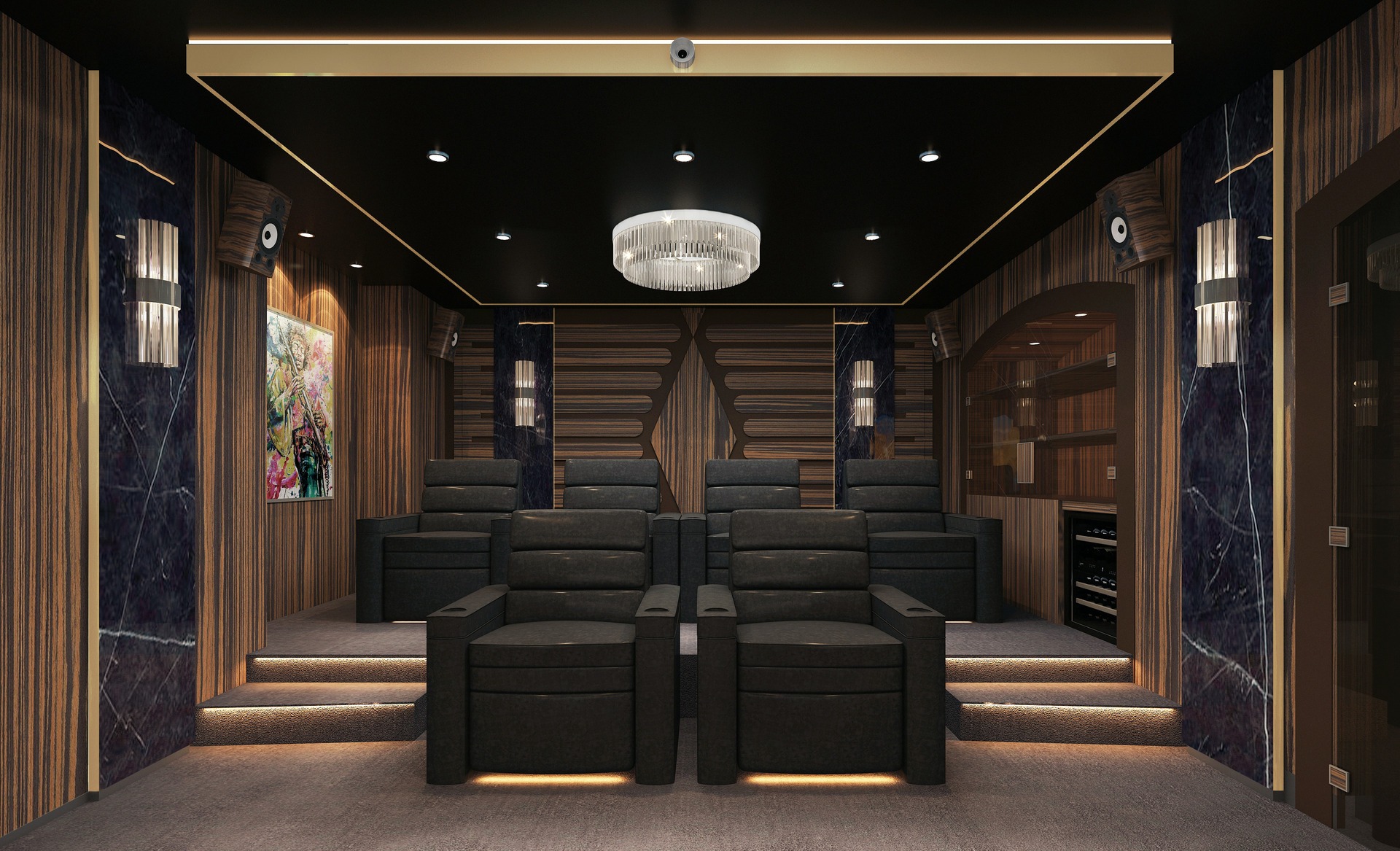
Control Systems Turn a Collection of AV Components Into a Unified Cinema Experience
A luxury home theater contains 15-30 individually controllable devices: projector, screen, audio processor, amplifiers, speakers, subwoofers, lighting circuits, HVAC zones, motorized curtains or acoustic panels, and the seating mechanisms themselves. Without a unified control system, operating the room requires navigating multiple remotes, wall switches, and apps. Smart automation consolidates everything into sequenced scenes — the owner presses one button, and the room transforms from a lit, ventilated social space into a calibrated screening environment in 30-60 seconds.
Control System Platforms: Crestron, Control4, and Savant
Crestron
Crestron is the professional standard for high-end residential and commercial installations. Programming is done in SIMPL (Symbol Intensive Master Programming Language), which requires certified programmer access. This means every change to the system — adding a new lighting scene, adjusting a macro sequence, integrating a new device — requires a dealer visit or remote programming session. The advantage: Crestron handles more simultaneous control points (500+) with lower latency than either competitor. For a cinema with 20+ controlled zones, Crestron’s processing architecture eliminates the lag that consumer-grade systems introduce when executing complex scenes.
Hardware cost for a cinema installation: processor (MC4-R, approximately 3500 EUR), touch panel (TSW-1070, approximately 2800 EUR), control modules (DIN rail, approximately 400-800 EUR per module). Total control infrastructure for a typical cinema: 12,000-18,000 EUR before programming labor.
Control4
Control4 runs on a more accessible programming platform (Composer Pro) with a larger dealer network. Programming changes are faster and less expensive than Crestron. The trade-off: Control4’s processing headroom is lower, and complex scenes with 15+ simultaneous commands may execute with 200-500ms delays between actions. For most cinema applications, this latency is imperceptible — lights dimming 300ms before the projector powers on is not a functional issue.
Control4 integrates natively with a wider range of consumer devices (Sonos, Hue, Ring) than Crestron, which matters if the cinema system needs to interact with existing whole-home automation. Hardware cost: EA-5 controller (approximately 2000 EUR), T4 touch screen (approximately 1800 EUR). Total: 8,000-14,000 EUR.
Savant
Savant’s differentiator is its user interface — the owner-facing app and touch panel are the most visually refined of the three platforms. The system uses Apple-based processing hardware, which provides fast responsiveness but limits integration with some legacy AV equipment that expects RS-232 or IR control from a Windows or Linux host. For new-build cinemas where all equipment is current-generation IP-controllable, Savant delivers a premium user experience. For retrofit installations with older equipment, verify compatibility before specifying.
Lighting Scene Programming
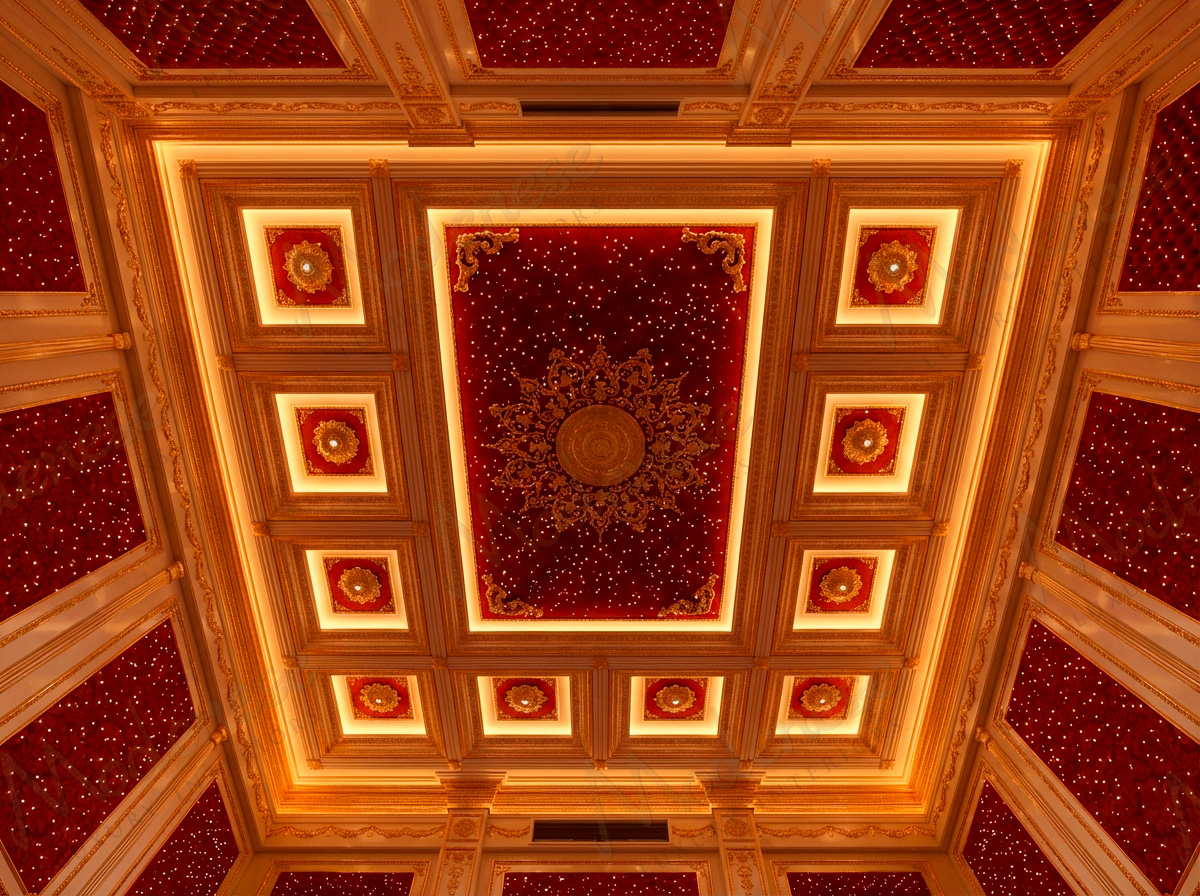
A cinema lighting system operates in defined scenes that transition automatically or on command. The physical infrastructure uses either DALI (wired, addressable) or DMX (wired, channel-based) protocols. DALI is preferred for residential installations because each luminaire has a unique address and can be individually controlled, while DMX requires channel mapping that complicates future modifications.
Standard Scene Sequence
Welcome/Social — all lights at 80-100%, cove lighting warm (2700K), step lighting on platforms active. Room functions as a normal living space.
Pre-show — overhead lights dim to 30%, cove lighting shifts to 2200K, screen lights illuminate the screen surface at low level. Audio system powers on, processor initializes. Duration: 15-20 seconds.
Screening — all room lighting off except step lights (dimmed to 5% on amber LEDs for safety), screen illuminated by projector only. HVAC transitions to low-speed mode (reduced fan noise). This scene triggers when the source device begins playback, detected via CEC signal or IP command from the media server.
Intermission/Pause — cove lighting rises to 20%, step lights to 15%. Triggered by pause command from the remote. A contemporary theater might add a colored accent wash during intermission — blue or amber from LED strips concealed in wall reveals.
Credits — cove lighting rises gradually over 60 seconds to 40% as the credits roll, reaching full social lighting 30 seconds after the credits end. This gradual transition prevents the jarring snap from dark screening to full brightness.
Motorized Screen and Masking Systems
A tab-tensioned motorized screen (Stewart Filmscreen, Screen Innovations, or Draper) drops from a ceiling-recessed housing and tensions flat via side cables. Motor noise should not exceed 40dB during deployment — specify a screen motor rated below this threshold, as the screen deploys during the pre-show scene when the room is quiet.
Constant-height masking systems use motorized black velvet panels that adjust the projected image width to match the content aspect ratio. A 2.35:1 film fills the full screen width; a 1.78:1 broadcast program triggers the side masks to close inward, reducing the visible width and maintaining the correct image proportions without black bars. The masking panels are driven by limit-switch-controlled motors and calibrated to the projector’s lens memory positions.
Projector lens memory stores zoom, focus, and shift positions for each aspect ratio. When the control system detects a 1.78:1 signal, it sends a recall command to the projector (via RS-232 or IP) for the 16:9 lens memory preset, and simultaneously commands the masking motors to the 16:9 position. The transition takes 3-5 seconds.
HVAC Noise Control
The target noise floor for a home cinema is NC-25 (Noise Criteria 25), which corresponds to approximately 30dBA. A standard residential HVAC system produces 35-45dBA at the diffuser — too loud for a cinema. Achieving NC-25 requires oversized ductwork (reducing air velocity and therefore turbulence noise), acoustic duct silencers (lined plenums, 600mm minimum length), and low-speed fan operation during screening mode.
Size supply ducts for a maximum air velocity of 3 m/s during screening mode, compared to the 5-7 m/s typical of residential systems. This means ducts approximately 60-70% larger in cross-section than standard residential sizing. The control system switches the HVAC between normal-speed (social mode) and low-speed (screening mode) as part of the scene automation.
The acoustic treatment covered in our acoustic panel guide manages reflections and reverberation, but background noise from HVAC, projector fans, and external sources defines the room’s noise floor — which no amount of acoustic treatment can reduce. The seating platform construction detailed in our seating layout guide includes vibration isolation that prevents HVAC-transmitted structure-borne noise from reaching the listener through the floor.
The same lighting control protocols used in home cinemas apply directly to walk-in closet lighting design, where DALI and Casambi manage zone-specific illumination. And the kitchen design process in open-plan homes increasingly requires coordination with adjacent cinema spaces — ensuring that kitchen ventilation noise doesn’t bleed into the screening room through shared wall structures, as covered in our island kitchen guide.